


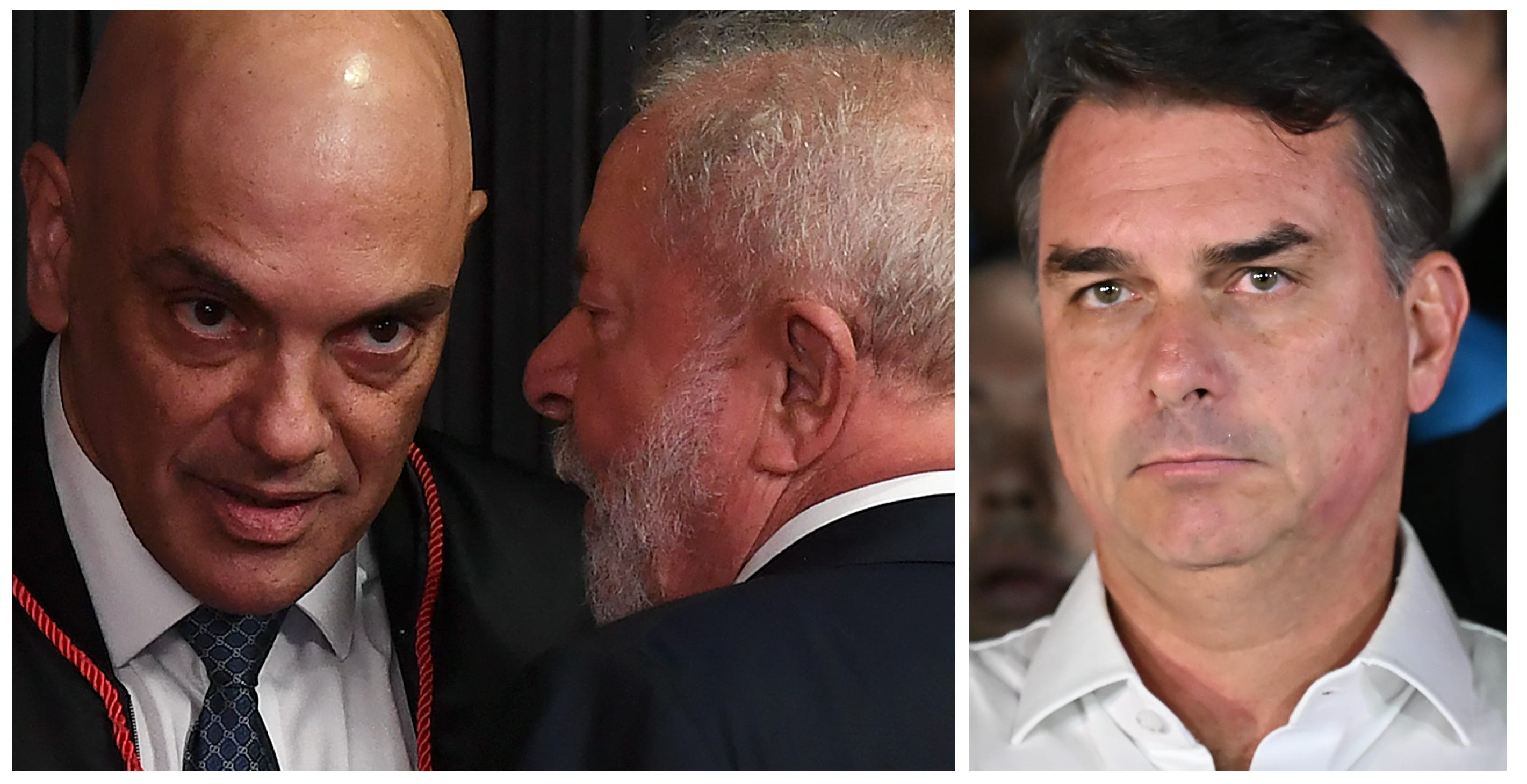
Flávio Bolsonaro, the senator who lost Brazil’s presidential runoff to Luiz Inácio Lula da Silva on Sunday, may be guilty of serious crimes, say Brazil’s Federal Police and Supreme Court. On Monday, Supreme Court Justice Alexandre de Moraes ordered Flávio to surrender his ordinary and diplomatic passports within 24 hours, stay in the country, and have no contact with Willer Tomaz, a Brasília lawyer under investigation for laundering money through betting platforms.
But the case against Flávio is transparent persecution and full of irregularities. It rests upon no proof of his guilt, much less any charge or conviction. Moraes took the Tomaz case through a randomized process run by the Supreme Court. The Federal Police signed their 16-page request to seize Flávio’s passports at 9:16 pm Sunday, just seven minutes after the electoral court confirmed his defeat. Moraes approved it later that night without consulting the federal Prosecutor General. Moraes’s own colleagues were surprised by the passport order and feared it would raise tensions, columnist Mônica Bergamo reported.
“It’s not just Flavio Bolsonaro who fled Brazil to escape the tyrannical persecution of Alexandre de Moraes and the pro-Lula wing of the Supreme Court,” notes journalist Glenn Greenwald, who has broken major stories about Moraes’ abuses of power. “There are dozens of Brazilian exiles who have done the same: dissident journalists, activists, bloggers, and politicians who all fled to avoid certain prison for political opposition.”
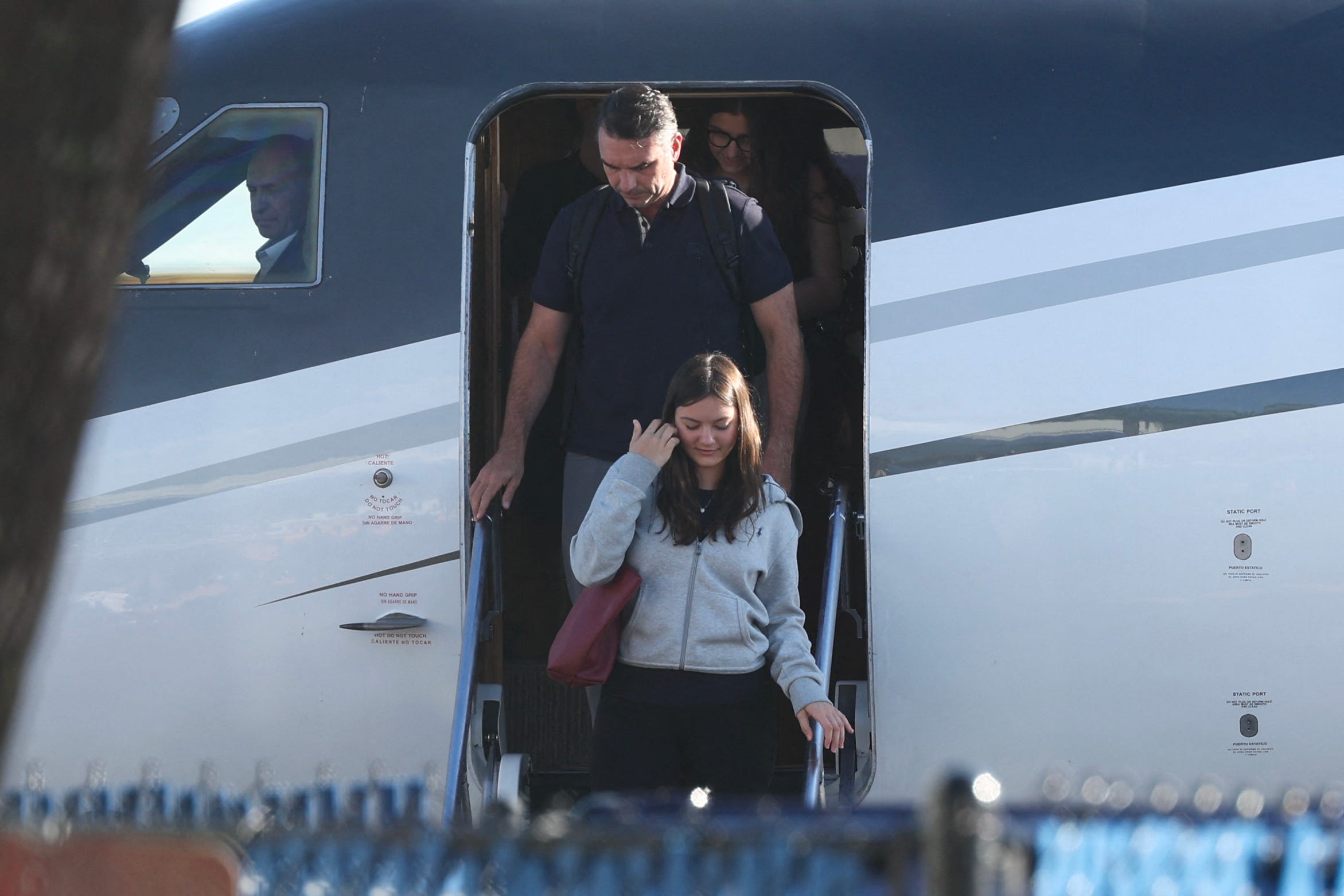
Supporters of Lula and Moraes point to evidence of potential wrongdoing relating to an association with Tomaz, the man who moved 5 billion reais ($895 million) through an online betting platform in a single year. Police found emails indicating Flávio shared a Santander account with Tomaz and was registered as “master user” of an account belonging to Alcazar Holdings, a Tomaz company in Madeira, Portugal. On May 22, 2025, as the pension fraud scandal broke, someone asked the bank to remove Flávio’s name, which investigators found suspicious. On May 25, 2023, Loterj president Hazenclever Cançado signed the authorization that made Tomaz’s Rede Loto the first betting company licensed in Brazil (just in Rio), and Cançado got his job on Flávio’s recommendation, Folha reported, citing people familiar with Loterj’s procedures. In a separate inquiry, a justice authorized an investigation into Flávio’s role in raising 61 million reais ($11 million) from banker Daniel Vorcaro for “Dark Horse,” a biopic of his father.
But none of this is proof, and nothing published shows that Flávio owned anything, received anything, or laundered anything. The men deny sharing a bank account or co-owning a betting business. No document names Flávio as a shareholder of Alcazar or the other relevant entities. The emails do not show who moved money in the account or whether the senator received illicit funds. Flávio admits he solicited the Dark Horse money but says it was private sponsorship with no public funds, which police have not disproved. On Tuesday, Lula said of Flávio’s departure, “This act of leaving Brazil is shameful,” and added that “the Bolsonaro family is this, it’s licking the boots of the US.”
And, by contrast, Lula was convicted twice of corruption and walked free on procedure. His first big corruption scandal, the Mensalão, a monthly cash-for-votes scheme that ran out of Lula’s first-term presidential office, ended in 2012 with the Supreme Court sentencing his chief of staff José Dirceu to 10 years and 10 months for active corruption and criminal conspiracy.
Another was for accepting as a bribe over $1 million in renovations to a triplex home from a construction firm that did billions of dollars of business with the government. Its executive testified in 2017 that “the apartment belonged to President Lula…” Prosecutors valued the apartment and renovations at 3.7 million reais ($1.2 million).
For accepting the bribe, a judge sentenced Lula to nine years and six months in 2017, and two years later a different judge sentenced Lula to 12 years and 11 months in a separate case involving a country home’s improvements that prosecutors said two construction firms paid for.
Lula left prison in November 2019, after 580 days and in 2021, a justice annulled the decisions because that court lacked jurisdiction. The court’s Second Panel declared the trial judge partial by a 3-2 vote, but no court ever found any evidence to be false. Lula ran for president the next year and won.
Last week Public reported that the accountant who prepared Lula’s income tax returns is under investigation by São Paulo prosecutors for laundering money for the Primeiro Comando da Capital (PCC), Brazil’s largest drug cartel, which the United States government designates a foreign terrorist organization. João Muniz Leite prepared Lula’s returns from 2013 to 2016, kept the books of Lula’s longtime lawyer for 14 years, and has been the accountant of Lulinha for more than 20 years, by the account of the son’s own lawyer.
Muniz Leite and his wife won federal lotteries 55 times in 2021 alone and split a 16 million real ($3 million) prize with a leading PCC drug supplier. On September 25, 2025, São Paulo prosecutors raided Muniz Leite for his role in PCC money laundering through gas stations, gambling houses, and motels. They wrote that the record left “no doubt about the active participation of João Muniz in the money laundering strategies.”
Before the runoff, on October 8, Brazil’s election court censored and fined Flávio for linking Lula to the PCC. Moraes began the censorship of allegations of a link between Lula and the drug cartel in 2022, the day of that year’s presidential first-round election. As president of the electoral court at the time, Moraes ordered a publication to remove a story reporting that the police had recorded a PCC leader declaring his support for Lula. Moraes then ordered hundreds of other posts against Lula removed at the request of Lula’s coalition.
Meanwhile, Moraes has his own ties to Vorcaro, whom police accuse of what appears to be the largest fraud against Brazil’s financial system in that country’s history. “Of all the various corruption allegations involving Vorcaro and Banco Master,” notes Greenwald, “the strongest and most compelling evidence is that which weighs against Alexandre de Moraes.”
There was a 131 million real ($23 million) legal services contract between Moraes’ wife’s firm and Vorcaro’s Banco Master. In the metadata of the documents, investigators found edits recorded under the user name, “Minister Alexandre de Moraes.” Moraes and Vorcaro met at least nine times between March 2024 and August 2025. In November, 2025, three days before his arrest, Vorcaro wrote to Moraes of a “debt of life” and thanked him for “everything.” Moraes acknowledged that the 131 million real ($23 million) contract “legally existing” but said his wife and sons “have the right, like all other lawyers, to practice the profession.”
Now, Lula has made clear he will crack down further, including expanding censorship in the name of “social media regulation.” In his victory speech, Lula asked that his campaign’s WhatsApp operation, known as “Lula’s Army,” continue inside the government. The same speech announced that “communication is going to change,” that he would talk to Brazilians “many times a day, directly,” and that “I am not going to keep allowing myself to be interpreted by journalists in bad faith.”
How did Brazil get here? And what would it take for it to come back to democracy?
Censorship for Corruption for Socialism
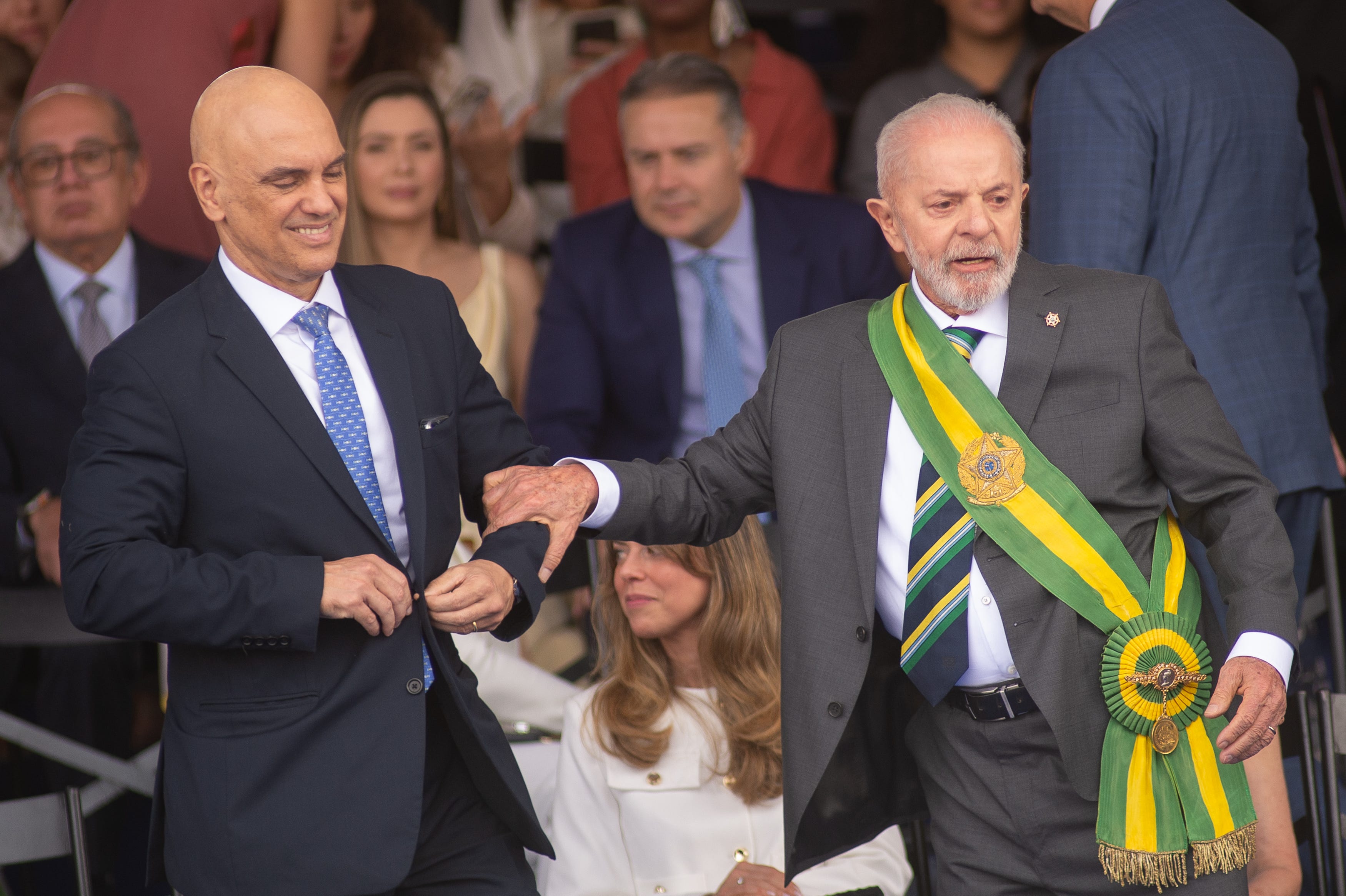
Brazil has long suffered from epic corruption, including of its judiciary. In 2016, the US Department of Justice recorded that Odebrecht, the Brazilian construction group, “paid approximately $788 million in bribes to government officials, their representatives and political parties.” It called it the largest foreign bribery case in history. Petrobras, the state oil company at the center of the Lava Jato investigation, says it lost 6.2 billion reais ($1.9 billion). Prosecutors traced at least 10 billion reais ($3 billion) in bribes across the companies involved. Brazil scored 35 of 100 on Transparency International’s 2025 Corruption Perceptions Index, 107th of 182 countries and tied for its second-worst score on record.
The corruption of Brazil’s judiciary is legion. Consider two cases. In October, the Superior Court of Justice convicted an appeals court judge and a trial judge to nearly 15 years and 16 years, respectively, for taking bribes in exchange for specific rulings in land disputes. In 2019, a different appeals judge was convicted of selling injunctions; today he draws 45,000 reais ($8,000) a month in compulsory retirement.
Lula and his Workers’ Party thundered for decades against corruption; in office they expanded it. The “Mensalão,” or big paycheck scandal, consisted of Lula’s team overseeing monthly payments to congressmen totaling 155 million reais ($53 million). In 2012, the Supreme Court convicted 25 of 38 defendants, including Lula’s chief of staff José Dirceu, PT president José Genoino and PT treasurer Delúbio Soares.
Lula denies it all. He told the New York Times in 2012, “I don’t believe the mensalão existed.” Earlier this year he called Lava Jato “the great lie of the 21st century in this country.”
Two frauds of unprecedented size occurred during Lula’s third term. Between 2019 and 2024, labor unions and associations deducted 6.3 billion reais ($1.3 billion) from pensions. An audit found that 97.6% of 1,273 retirees said they had never authorized the deduction. Police arrested the head of the pension agency Lula had appointed in 2025.
Banco Master, the bank that fraudster Daniel Vorcaro ran, left a record-breaking 51.8 billion real ($9.7 billion) hole in the pension fund. Meanwhile, Vorcaro had visited the presidential palace at least four times in 2023 and 2024. He attended a meeting with Lula that never appeared in the official visitor log.
Moraes’s censorship thus protects a corruption racket. He has run the Supreme Court’s “fake news inquiry” since 2019. The court opened it with him as its rapporteur. In August 2024, Fábio Serapião and Glenn Greenwald published six gigabytes of WhatsApp messages in the Folha de São Paulo showing Moraes’s office ordering the electoral court’s disinformation unit to produce reports that he then used in that inquiry.
Then, on August 31, 2024, Moraes shut down X for 20 million Brazilians and threatened anyone using a VPN with a daily fine of 50,000 reais ($8,900). After Moraes froze Starlink’s assets, also owned by Elon Musk, X complied and removed 223 accounts on court orders since 2020, 158 of them from Moraes.
Neither the high court nor the Senate has done the right thing. The Federal Police report on Vorcaro namesand implicates six of the Supreme Court’s ten justices. On September 15, the court deadlocked 4 to 4 on whether to open an inquiry into Moraes before Justice Flávio Dino suspended the vote. Meanwhile, the Senate holds 55 impeachment requests against Moraes. But its president, Davi Alcolumbre, said he would not schedule one “even with 81 signatures.”
Moraes came from the political right, which is evidence that his censorship protects a corruption racket rather than an ideologically left-wing program. He began in the PFL, the party of the old military-era right, and backed Dilma’s removal. “It’s complicated to have on the STF a justice affiliated with a party,” objected Carlos Zarattini, a PT deputy, when Temer named him.
Moraes has accommodated himself with Lula’s leftism, which supplies his legitimacy and justification for control over the judiciary, as it did in Venezuela, where a socialist government captured the courts and looted the state. Receiving Nicolás Maduro in Brasília in 2023, Lula said Venezuela suffered from “a narrative that was built against Venezuela.” A month later Lula told Rádio Gaúcha, “Venezuela has more elections than Brazil. The concept of democracy is relative for you and for me.”
Even the same firms were involved in the corruption. Odebrecht admitted to the US Justice Department that it “made and caused to be made approximately $98 million in corrupt payments to government officials and intermediaries working on their behalf in Venezuela” between 2006 and 2015, and of the $12 billion Brazil’s development bank lent for exports from 2007 to 2015, $8 billion went to Odebrecht. Venezuela still owesthat bank $1.74 billion.
There is a judicial parallel. Former President Hugo Chávez expanded the Supreme Tribunal from 20 to 32 seats in 2004, filling them with allies. Then, his successors’ lame-duck assembly named 13 more justices in December 2015 after the opposition won the legislature. Finally, in March 2017, the high court seized the legislature’s powers in what the International Commission of Jurists called “a true coup d’état against the constitutional order.”
Brazil differs only in degree and in means from Venezuela. The latter scores 10 on the corruption index to Brazil’s 35. Brazil’s opposition won the first round under OAS and EU observation. Brazil’s central bank has had operational autonomy since 2021, which Lula’s government opposed extending. Chávez packed his court from outside. By contrast Brazil’s court captured itself from inside, and the party that benefited was Lula’s.
Beyond Dictatorship
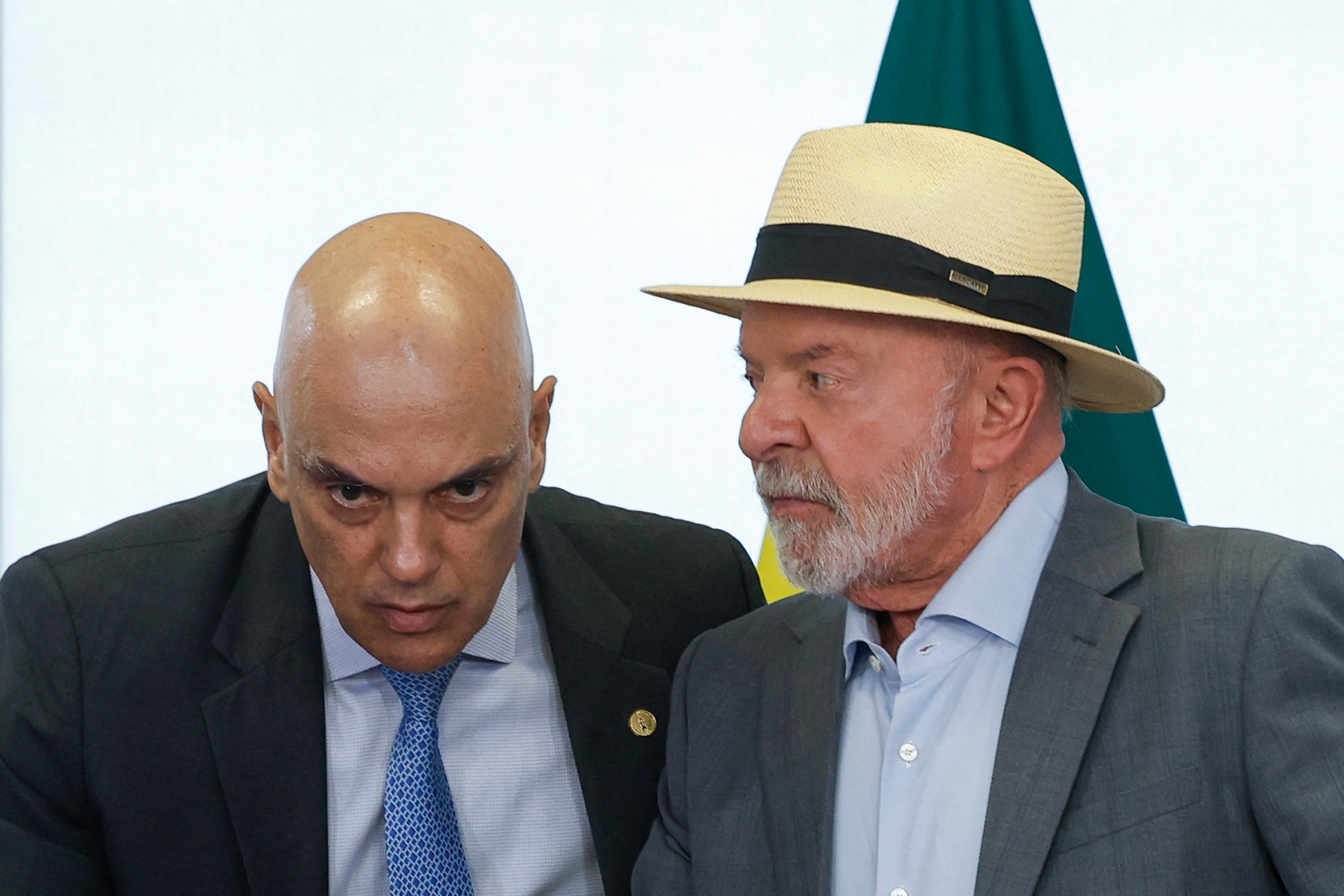
Brazil is moving toward a Chinese model of censorship. Lula said he had asked Xi Jinping to send “a trusted person” to discuss regulating TikTok. Lula’s wife, Janja, cited China’s rules for social media as a model, noting “there is prison” for people who say the wrong thing. Lula will name at least four more justices in his fourth term.
In his victory speech on Saturday night, Lula said, “We had to defeat interference from outside to inside, through digital platforms that we are going to have to regulate,” and that “crime on the digital network must be treated as crime in real life,” which is Moraes’s formula in the president’s mouth. He promised that foreign platforms “are going to have to leave part of the data center for Brazilian information” and that “I don’t want to depend on Chinese or American artificial intelligence.”
Lula is bringing Brazil closer to China in other way. In Beijing in May 2025, Lula signed 36 agreements, including a Dataprev deal with a Huawei subsidiary for artificial intelligence data infrastructure and a memorandum with China’s National Data Administration. China imported 28.7% of Brazil’s total exports in 2025, a record $171 billion.
But the lawfare against Flávio is blatant and confirms what the censorship of Bolsonaro’s supporters and of Flávio’s posts on the PCC had already shown, namely that Brazil’s courts now decide what voters may hear, and thus exert indirect control over elections.
“Moraes has overseen a system of political persecution masquerading as criminal justice that has been recognized as a sham by multiple countries that are not exactly Bolsonaro allies,” notes Greenwald. “Nobody in their right mind who is a political enemy of Moraes would remain in Brazil once if it is clear that he intends to imprison you, since he has proven that guilt is a foregone conclusion and he operates with no legal or constitutional limits of any kind.”
Meanwhile, foreign courts have made clear that they do not believe Moraes is an impartial justice. On October 22, a court in Italy refused to extradite the former Moraes aide charged over the leak of messages from the justice’s office, because Moraes was the “injured party in the facts charged” and also “directed the investigation, evaluated its results, adopted restrictive measures.” In April 2025, Spain’s Audiencia Nacional refused to extradite a blogger and said finding Brazil’s request had an “evident political connection and motivation.”
Meanwhile, Lula has little in the way of an agenda beyond the censorship he promised more of in his victory speech, which could further corrode his legitimacy. He won 51.8% of valid votes after losing the first round 47% to 45%. Datafolha’s last pre-runoff reading had 41% of voters rating his government bad or terrible against 35% good or great; 50% disapproved of him.
Meanwhile, the fake news bill Lula’s government backed has been stalled since April 2024, right around when David Ágape and Eli Vieira, both exiled, and I published the Twitter Files - Brazil.
And so the persecution of the Bolsonaros will increasingly be seen as precisely that. AtlasIntel already found61% do not trust the court’s justices. Estadão, Folha and O Globo all editorialized on September 1 and 2 that Moraes should go, Estadão under the headline “Moraes has to leave the Supreme Court,” and he stayed. In a September Indexa poll, 45% of Brazilians surveyed said Moraes decides mainly on political criteria and 16% on legal ones.
In July, Datafolha found 59% thought he was wrong to bar Flávio from visiting his jailed father. Datafolha found in September that 34% of Brazilians want Moraes removed from the court, before the passport order. Public distrust of the Supreme Court was 48% in Datafolha’s September poll, the highest since the series began in 2012.
Even The Economist, now a left-wing publication, wrote in April 2025 that “Brazilians have lost faith in two of their three branches of government” and that the judiciary “needs to be reduced,” as translated by BBC Brasil. In September 2026, after the Vorcaro file opened, it said the misuse of Brazil’s institutions “could undermine confidence in democracy more than Bolsonaro ever did,” again in BBC Brasil’s translation.
This is what Biden did to Trump! AOC celebrated Lula’s victory like the corrupt communist we all know she is.
This is the same tactic that the CCP uses to eliminate those who don't demonstrate sufficient levels of loyalty. Imbedding the look of corruption into those who need to be eliminated.
CCP is practically running Brasil now. It's a problem for the Donroe Doctrine.